Facial Volume Changes After Weight Loss
Treated at our Scranton office, 5 Morgan Highway, Suite 3, Scranton, PA 18508.
How we treat facial volume changes after weight loss
-
Start with a full-face consultation
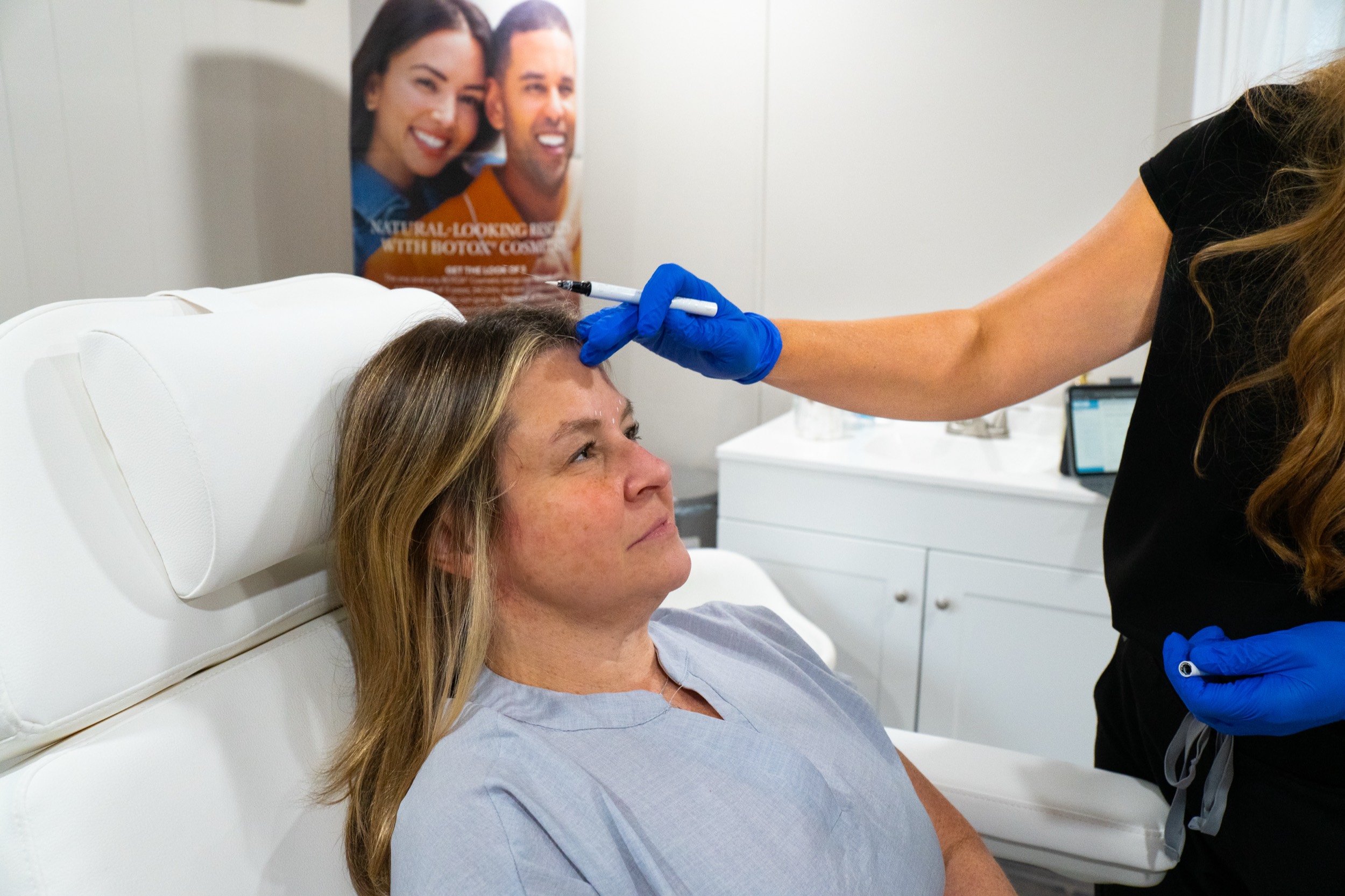
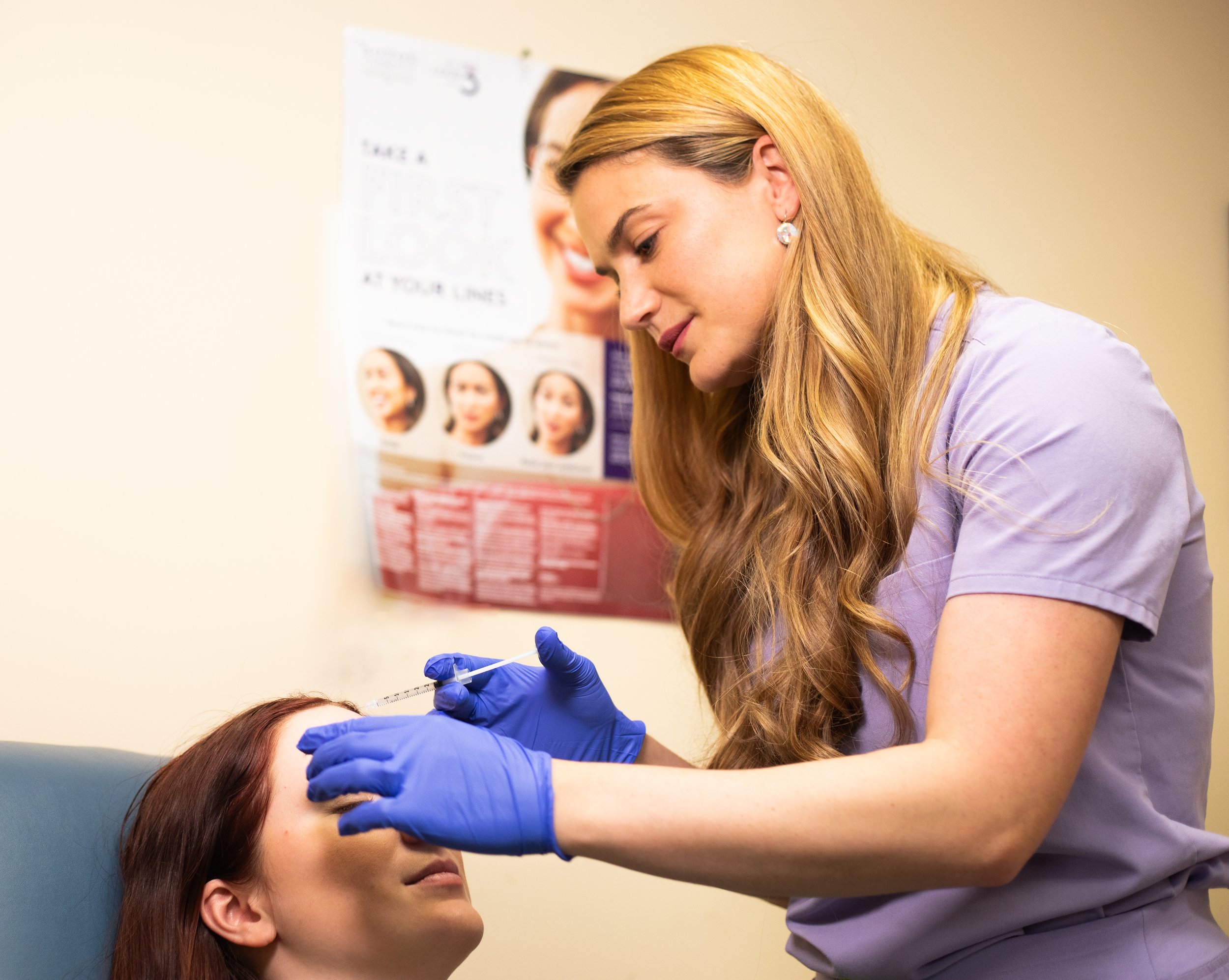
Come in for a consultation. Your provider will assess your whole face, review your health history, including any weight loss medications, and talk you through your options.
-
Dermal filler
- Adds new volume, with results you see at the appointment.
- Often used in the cheeks, temples, and the lines that frame the mouth.
-
Collagen stimulation
- Your own body produces the volume as collagen rebuilds.
- Results build over months and are among the longest-lasting we offer, which suits volume change across larger areas of the face.
Treatments We Offer for Volume After Weight Loss
Dermal Fillers
Juvederm®, Restylane®, Revanesse®, Sculptra®, and Radiesse® add volume and definition, working to the proportions of your own face.
Read moreCollagen Stimulation
Sculptra® and Radiesse® are biostimulators: your own body rebuilds collagen, for results that last.
Read moreMed-Grade Skin Care
Provider-recommended products that keep your skin healthy over the long term, chosen for your skin rather than for everyone’s.
Read moreSee the full list of services to learn what each involves.
What Changes in the Face After Weight Loss?
Significant weight loss, whether through lifestyle changes, GLP-1 medications, or surgery, reduces the facial fat that supports the skin. The result many people describe is a face that looks thinner and more tired than they feel.
The fat compartments that give the cheeks and temples their fullness shrink along with the rest of the body, and the skin has less structure to rest on. The change often arrives faster than age-related volume loss, which is why it can feel sudden.
Injectable treatment restores volume and support in the face. Where significant skin laxity is the primary concern, in the face or elsewhere on the body, surgical or dermatologic care outside our practice may serve better, and your provider will refer you to the right specialist.
How this is usually described
- Flatness through the cheeks and temples
- Shadowing that reads as fatigue even when you are well rested
- Deeper folds running from the nose toward the mouth
- A softer line along the jaw
- Skin with less support than before the weight loss
What contributes to it
- Reduction of the facial fat compartments along with body fat
- The pace of the loss, which gives the skin less time to adapt
- Age-related changes in collagen that were already underway
- Cumulative sun exposure affecting the skin’s support
Why Weight Loss Shows in the Face
The face keeps its shape through fat compartments supported by bone and ligaments. Weight loss reduces those compartments along with the rest of the body, and medications like GLP-1s can make the change arrive faster. The skin itself is unchanged at first; it simply has less beneath it, which is why treatment focuses on restoring support.
How to Approach Facial Volume After Weight Loss
- Bring your health history, including weight loss medications, to the consultation.
- Expect a full-face assessment, because the fat compartments support one another.
- Ask about dermal filler for volume you see the same day, and biostimulators for results that build over months.
- Daily sun protection and medical-grade skin care support everything else.
Volume After Weight Loss: common questions
My face changed quickly on a GLP-1 medication. Is that expected?
Weight loss reduces facial fat along with the rest of the body, and faster loss shows in the face sooner. A consultation is the right place to sort out what changed and which options fit; bring your medication history with you.
Filler or a biostimulator: which restores volume after weight loss?
They work differently. A hyaluronic acid filler adds new volume, and you see the result at the appointment. Sculptra® and Radiesse® are biostimulators: your own body produces the volume as collagen rebuilds, so results build over months and last longer. Some plans use one, some use both, and your provider will recommend which fits your goals.
Do you treat skin changes elsewhere on the body?
Our practice treats the face. Where the main concern is skin laxity, in the face or elsewhere, your provider will refer you to surgical or dermatologic care that fits.
Helpful resources
Volume After Weight Loss treatment near you
We welcome patients from Lackawanna County, Luzerne County, Wyoming County, Wayne County, Susquehanna County and Monroe County. See all the communities we serve.
Other Concerns We Treat Near You
Frown Lines & Forehead Wrinkles
Frown lines and forehead wrinkles behave differently depending on whether they show at rest. We offer Botox® and other treatments at our office in Scranton.
Read moreCrow's Feet
Crow's feet form where the face's finest skin sits over a muscle that moves with every blink and smile. We offer Botox® and other treatments at our office in Scranton.
Read moreVolume Loss & Hollowing
Facial volume sits in fat pads, bone and ligaments, and all three shift with time. We offer dermal filler at our office in Scranton.
Read moreLip Enhancement
Volume is only one of several things people ask about when they talk to us about their lips. We offer lip filler at our office in Scranton.
Read moreAcne Scarring & Texture
Post-acne marks and acne scars are different things and respond differently. We offer SkinPen® microneedling at our office in Scranton.
Read moreSun Damage & Uneven Tone
Cumulative ultraviolet exposure affects both tone and texture. We offer medical-grade skin care and SkinPen® microneedling at our office in Scranton.
Read moreMenopause Skin Changes
Estrogen supports collagen, and skin changes as it declines. We offer skin care, collagen stimulation, and filler at our office in Scranton.
Read moreEvery treatment is performed by a licensed medical provider
- Chris Connor, MD is our Medical Director, board certified in Physical Medicine and Rehabilitation with a sub-specialty in Pain Medicine.
- Bailey McGloin, PA-C, Caitlin Mesko, PA-C, and Olivia Gentilezza, PA-C are Physician Assistants, each certified by the National Commission on Certification of Physician Assistants.
We always start with a consultation, at 5 Morgan Highway, Suite 3, Scranton, PA 18508. Text or call 570-507-1451.
Schedule your visit with a licensed provider.
Board-certified physicians and physician assistants, at our Scranton office. Text or call 570-507-1451.